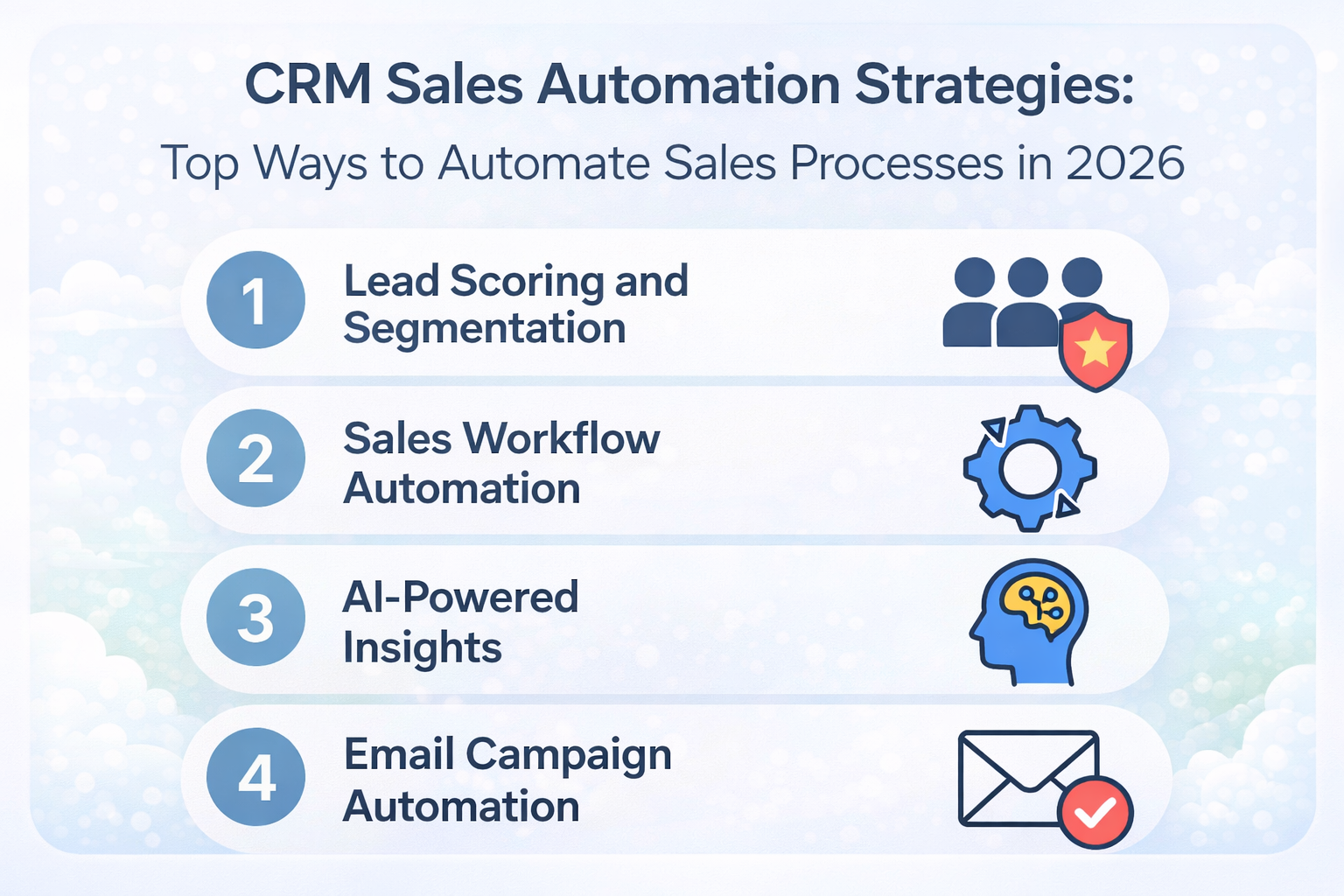
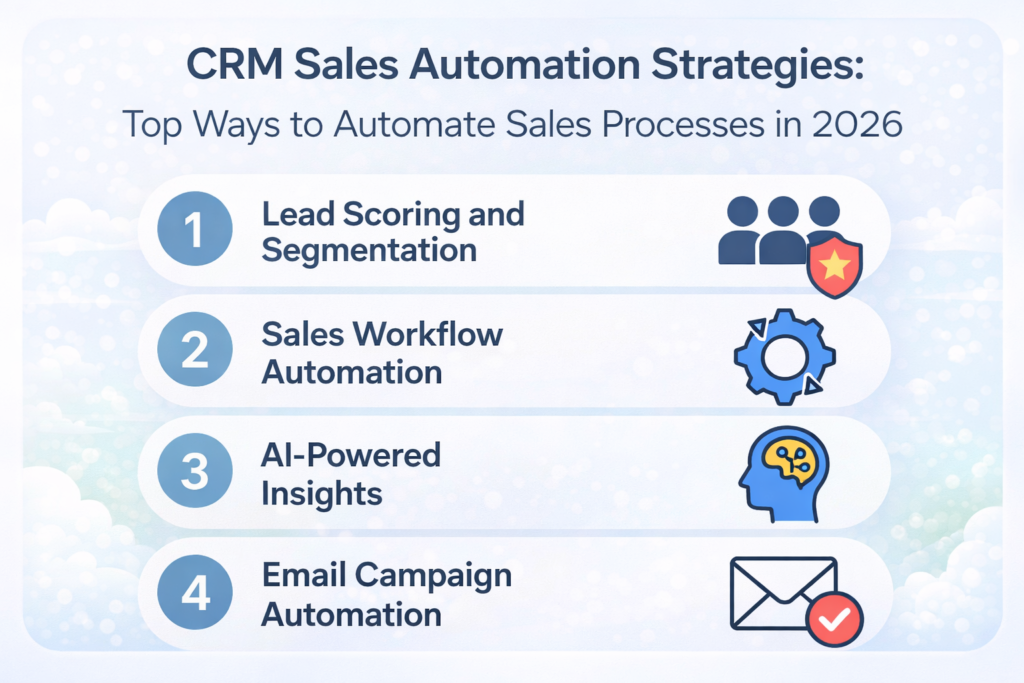
Discover powerful CRM Sales Automation strategies to streamline workflows, improve lead management, and boost revenue. Learn how businesses automate sales processes for faster growth.
Table of Contents
Sales automation powered by CRM platforms has become a critical advantage for businesses that want to scale efficiently, eliminate repetitive tasks, and accelerate revenue growth. By implementing CRM Sales Automation, companies can streamline operations, improve lead management, and give sales teams more time to focus on closing deals instead of handling administrative work.
This guide explores practical and proven approaches to CRM Sales Automation, combining technology, data insights, and workflow optimization to transform modern sales processes.
Why Automate Sales with a CRM?
Adopting CRM Sales Automation helps organizations simplify complex sales activities while improving accuracy and consistency.
- Reduce time spent on manual data entry and administrative tasks.
- Improve lead qualification so teams focus on high-value prospects.
- Standardize workflows to shorten sales cycles and improve efficiency.
- Gain actionable insights through real-time analytics and reporting.
- Deliver timely, personalized communication that strengthens customer relationships.
Top CRM Sales Automation Strategies
1. Automate Lead Capture and Assignment
Connect your CRM to webforms, chatbots, landing pages, and email systems so leads are captured automatically. With CRM Sales Automation, leads can be routed instantly to the right sales representative based on territory, expertise, or deal value—ensuring faster response times.
2. Use AI-Powered Lead Scoring
Modern CRM Sales Automation tools use AI and machine learning to evaluate leads based on engagement, behavior, and demographics. This allows teams to prioritize prospects most likely to convert, improving efficiency and win rates.
3. Automate Follow-Ups and Scheduling
Automated reminders, emails, and meeting scheduling ensure no opportunity is missed. CRM Sales Automation keeps communication consistent and timely without requiring manual tracking.
4. Streamline Document and Proposal Creation
CRMs can automatically generate quotes, proposals, and contracts using pre-built templates populated with customer data. This feature of CRM Sales Automation reduces errors and accelerates deal closures.
5. Track Sales Activities Automatically
Emails, calls, meetings, and notes can be logged automatically into the CRM. With CRM Sales Automation, managers gain real-time visibility into team performance without relying on manual updates.
6. Automate Pipeline Progression
Set triggers that move deals through pipeline stages based on defined actions, such as completed forms or approvals. This ensures forecasting accuracy while maintaining consistent workflows through CRM Sales Automation.
7. Use Alerts and Notifications to Stay Proactive
Real-time alerts notify sales reps about customer actions, deal updates, or inactivity. These automated signals help teams respond quickly and maintain momentum throughout the sales cycle.
8. Personalize Engagement with Automated Campaigns
Multi-channel campaigns across email, SMS, and social platforms can be triggered by customer behavior. CRM Sales Automation ensures messaging is relevant, timely, and aligned with buyer intent.
The Impact of CRM Sales Automation (Key Insights)
Organizations implementing CRM Sales Automation consistently report measurable improvements:
- Sales productivity can increase by up to 30%.
- Automated lead scoring significantly improves conversion performance.
- Marketing and operational overhead can be reduced through workflow automation.
- Businesses see stronger pipeline growth and more qualified opportunities.
- AI-powered CRM adoption continues to rise as companies seek better personalization and forecasting.
Sales Automation Features and Their Benefits
| Feature | Business Benefit | Common Tools |
|---|---|---|
| Lead Capture Automation | Instantly collect and assign leads | HubSpot Forms, Web-to-Lead |
| AI Lead Scoring | Focus on high-conversion prospects | Salesforce Einstein, Zoho Zia |
| Follow-Up Reminders | Ensure consistent communication | Pipedrive, Freshsales |
| Document Automation | Generate accurate proposals quickly | PandaDoc, DocuSign |
| Activity Logging | Automatically track interactions | Salesforce, HubSpot |
| Pipeline Automation | Maintain accurate deal stages | Zoho CRM, Copper |
| Automated Alerts | Notify teams of key actions | Freshworks CRM |
| Personalized Campaigns | Trigger targeted outreach | ActiveCampaign, HubSpot |
Best Practices for Implementing CRM Sales Automation
To get the most value from CRM Sales Automation, companies should:
- Begin with a pilot project targeting high-impact processes.
- Involve sales teams early to encourage adoption and feedback.
- Continuously refine workflows using performance data.
- Integrate CRM automation with marketing tools and analytics platforms.
- Provide training to ensure teams understand and trust automated systems.
Frequently Asked Questions
Is sales automation difficult to implement?
Most modern CRM platforms offer no-code tools, making CRM Sales Automation easier than ever to deploy.
How quickly can businesses see results?
Many organizations notice productivity improvements within three to six months.
Can small businesses benefit from CRM automation?
Yes, cloud-based solutions make CRM Sales Automation accessible and scalable for SMBs.
What role does AI play in sales automation?
AI enhances lead scoring, forecasting, and personalization, helping teams close deals faster.
Conclusion
CRM Sales Automation is no longer optional—it’s a strategic necessity for businesses aiming to scale efficiently and stay competitive. By automating lead management, workflows, and communication, organizations can improve productivity, reduce manual workload, and accelerate revenue growth.
Companies that embrace CRM Sales Automation gain stronger pipelines, better customer engagement, and the ability to focus on what matters most: building relationships and closing deals.
